

Alloy Steel Full / Half & Reducing Coupling
Home - Alloy Steel - Alloy Steel Forged Fittings - Alloy Steel Full / Half & Reducing Coupling
Alloy Steel Full / Half & Reducing Coupling
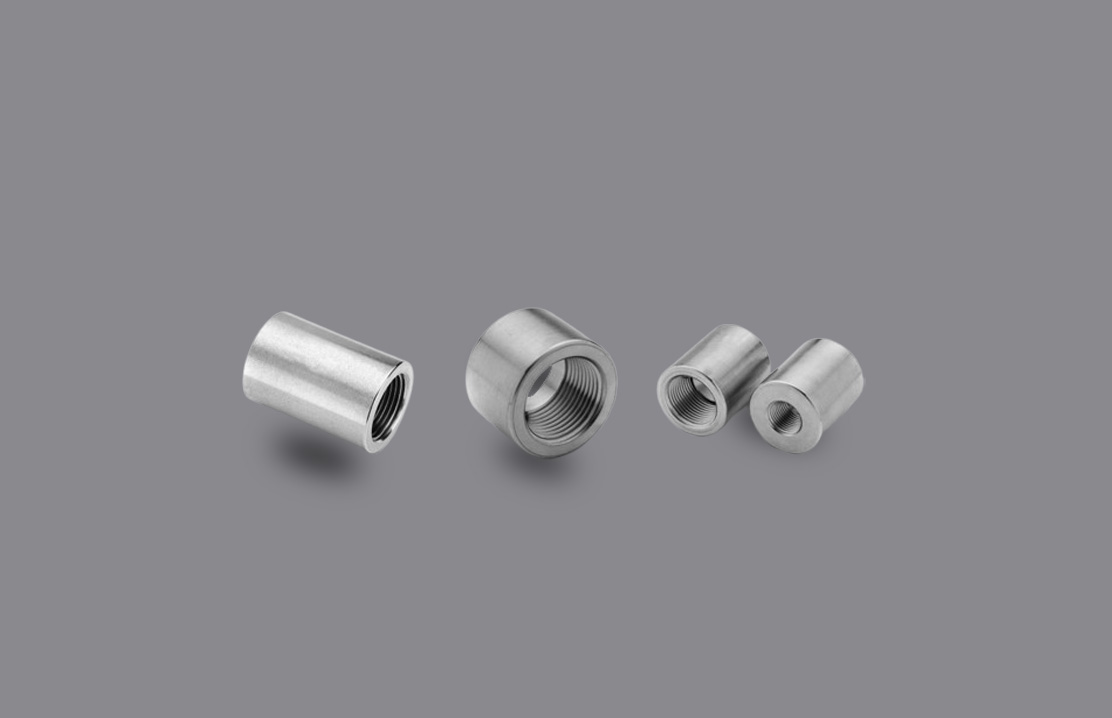
EBY Fasteners is one of the leading manufacturers, suppliers, and exporters of high-quality Alloy Steel Full / Half, and Reducing Couplings. These couplings are designed and made to perfection under the guidance of adept professionals
A coupling (or coupler) is a very short length of pipe or tube, with a socket at one or both ends that allows two pipes or tubes to be joined, welded (steel), brazed, or soldered (copper, brass, etc.) together. EBY Fasteners offers these couplings in various shapes, sizes, specifications, and thicknesses to meet the client’s requirements
EBY Fasteners is an ISO 9001-2015 certified company, and all fittings manufactured are supplied in the brand name of “EBY”. They are committed to providing the highest manufacturing standards and compliance with applicable ANSI, BS, and MSS-SP specifications
EBY Fasteners is an ISO 9001-2015 certified company, and all fittings manufactured are supplied in the brand name of “EBY”. They are committed to providing the highest manufacturing standards and compliance with applicable ANSI, BS, and MSS-SP specifications
- ASTM / ASME A 182 : This is a common specification for forged or rolled alloy and stainless steel pipe flanges, forged fittings, and valves and parts for high-temperature service.
- ASTM / ASME A 335 GR P 1, P 5, P 9, P 11, P 12, P 22, P 23, P 91 : These are grades of seamless ferritic alloy-steel pipe for high-temperature service.
- ASTM / ASME A 691 GR 1 CR, 1 1/4 CR, 2 1/4 CR, 5 CR, 9CR, 91 : These are grades of carbon and alloy steel pipe, electric-fusion-welded with filler metal added, fabricated from pressure-vessel-quality plate of several analyses and strength levels and suitable for high-pressure service at high temperatures
- Dimensions : The dimensions of these couplings are governed by several standards, including ASME 16.11, MSS SP-79, MSS SP-95, 83, 95, 97, and BS 3799. These standards ensure that the couplings are manufactured to precise measurements for a secure fit and proper function.
- Standard : The ASTM A182 and ASTM SA182 standards specify the materials, heat treatment, and other necessary requirements for these couplings. These standards ensure the couplings are durable and can withstand the conditions they will be used in.
- Class : The class of a coupling refers to its pressure rating. The classes mentioned here (2000 LBS, 3000 LBS, 6000 LBS, 9000 LBS) indicate the maximum pressure that these couplings can withstand. Higher classes can withstand higher pressure.
- Size : The size of these couplings ranges from 1/4″ NB TO 4″ NB. This size refers to the nominal bore (NB) size of the pipes that these couplings can be used with.
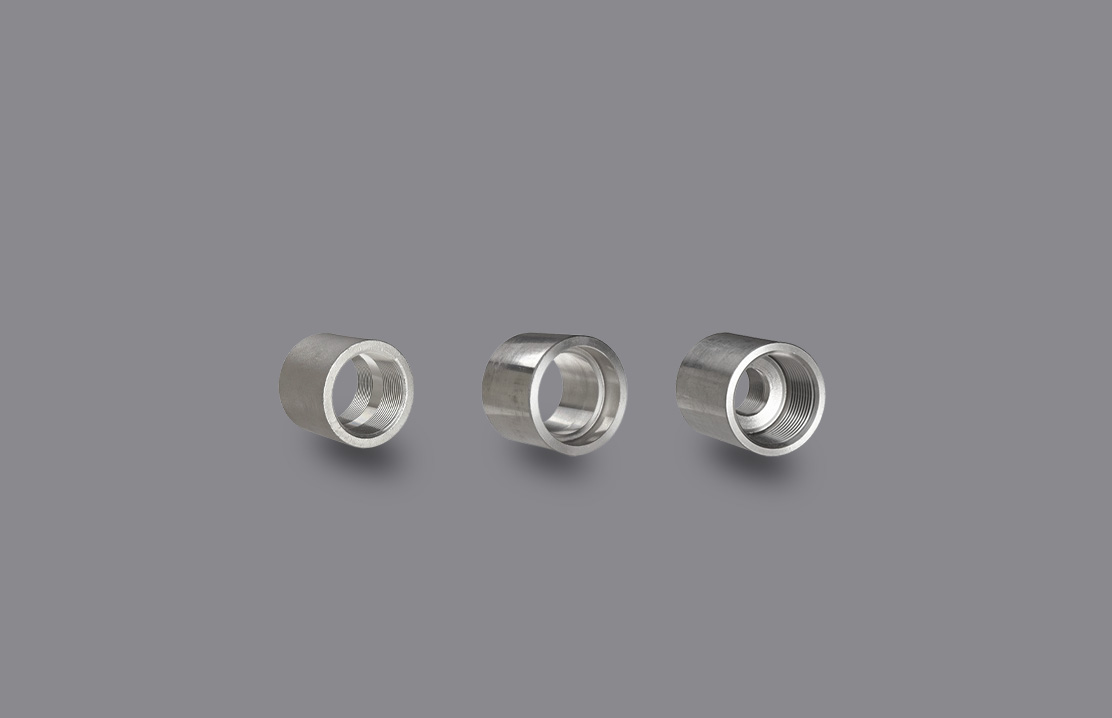
- Form : These couplings come in various forms, including full couplings, half couplings, and reducing couplings. Full couplings are used to connect two pipes of the same size, half couplings are used to add a branch to a pipe, and reducing couplings are used to connect two pipes of different sizes
- Full Coupling : Full couplings are designed to connect two pieces of pipe together using a socket-welded or threaded connection. This type of connection requires that both pipes be cut precisely so that when joined together, both ends form a reliable seal without needing additional materials such as gaskets or sealants.
- Half Coupling : This type of coupling only connects one end of the pipe, leaving an open end on the other side. It’s important to note that half couplings require additional jointing materials such as gaskets or sealants to ensure their connections remain watertight. Half couplings are typically used when connecting pipes in tight spaces where full couplings cannot be used.
- Reducing Coupling : Reducing couplings are pipe fittings designed to allow pipes of dissimilar diameters to be joined together. These fittings are typically used where small consumer or process feeder lines are joined into large supply circuits or where small diameter fittings are installed.
- Material Types : Normally there are carbon steel coupling and stainless steel coupling. For carbon steel pipe coupling the material standard is ASTM A105, manufacturing standard ASME B16.11. For stainless steel coupling material standard is ASTM A182.
- Manufacturing Methods : There are two manufacturing methods: Forging and Casting. Forging process: Raw material as steel ingot or a round bar, heating and forging. After that do threading or not as required. Casing process: Melting the steel ingot and pouring it into a fixed mode and cooling it.
- Threaded Coupling Ends Design : In case of the threaded coupling, the coupling ends normally in female of NPT (National Pipe Threads) or in male and female BSP (British Standard Pipe Threads).
- Refinery & Petrochemical : These couplings are used in pipelines and machinery for transporting and processing oil, gas, and petrochemicals. They can withstand high pressures and temperatures, making them ideal for this industry.
- Chemical : In the chemical industry, these couplings are used in piping systems for the safe transport of hazardous chemicals. Their corrosion resistance makes them suitable for this application.
- Oil & Gas : These couplings are used in both upstream and downstream processes in the oil and gas industry. They are used in drilling rigs, pipelines, and processing plants.
- Power Plant : In power plants, these couplings are used in various systems including steam generation, cooling, and fuel supply. They can withstand the high-pressure and high-temperature environments found in power plants.
- Offshore Platforms : These couplings are used in the harsh marine environment of offshore platforms. They are used in systems for drilling, production, and processing of oil and gas.
- Ship Building : In shipbuilding, these couplings are used in various systems including propulsion, fuel supply, and water systems. They are designed to withstand the corrosive marine environment.
- Industrial Machineries : These couplings are used in various types of industrial machinery for fluid and gas transport. They are used in hydraulic systems, pneumatic systems, and cooling systems.
- Pharmaceuticals : In the pharmaceutical industry, these couplings are used in systems for the production and processing of pharmaceutical products. They are designed to meet the stringent hygiene standards of this industry.
- Pumps & Compressor : These couplings are used in pumps and compressors for connecting the drive shafts to the driven shafts. They can handle the high torque and vibration levels found in these machines.
- Dairy & Food : In the dairy and food industry, these couplings are used in systems for the processing and transport of food products. They are designed to meet the hygiene standards of this industry.
- Sugar Mills : In sugar mills, these couplings are used in various processes including juice extraction, evaporation, and crystallization. They can handle the corrosive environment found in sugar mills.
- Textile Machineries : These couplings are used in various types of textile machinery for fluid and gas transport. They are used in dyeing machines, spinning machines, and weaving machines.
- Fertilizers & Pesticides : In the fertilizer and pesticide industry, these couplings are used in systems for the production and processing of fertilizers and pesticides. They can handle the corrosive chemicals used in this industry
Chemical Composition
| Element | Composition |
|---|---|
| Carbon (C) | Maximum 0.35% |
| Manganese (Mn) | For each reduction of 0.01 of Carbon content, Manganese maximum content increases 0.06%, up to the maximum 1.35% for Mn |
| Silicon (Si) | Maximum 0.35% |
| Copper (Cu), Nickel (Ni), Niobium (Nb), and Molybdenum (Mo) | Sum content shall not exceed 1.00% |
| Niobium (Nb) + Molybdenum (Mo) | Shall not exceed 0.32% |
Alloy Steel Forged Fittings
- Alloy Steel 45° ELBOW
- Alloy Steel 90° Elbow & Reducing Elbow
- Alloy Steel Cross Tee
- Alloy Steel Equal Tee
- Alloy Steel Unequal Tee
- Alloy Steel Forged Cap
- Alloy Steel Forged Nipples
- Alloy Steel Forged Union
- Alloy Steel Full/Half & Reducing Coupling
- Alloy Steel Plugs & Bushings
- Alloy Steel Swage Nipples
- Alloy Steel Reducing Insert Fitting


