

Alloy Steel Flanges
Home - Alloy Steel - Alloy Steel Flanges
Alloy Steel Flanges
EBY Fasteners offers a range of alloy steel flanges for robust and reliable connections in demanding industrial piping systems. These flanges leverage the superior strength, toughness, and corrosion resistance of alloy steels. They cater to industries like oil and gas, chemical processing, and power generation, where harsh environments and extreme temperatures are common. EBY Fasteners' alloy steel flanges likely include stainless steels, low-alloy, and high-alloy grades, ensuring compatibility and dependable performance in various applications
Versatility of Alloy Steel Flanges
Alloy steel flanges demonstrate exceptional versatility due to their customizable properties, wide range of available grades, and compliance with industry standards. This allows them to excel in diverse industries like oil and gas, chemical processing, and power generation. Their ability to be tailored for specific requirements in strength, corrosion resistance, and temperature performance makes them adaptable solutions for demanding industrial piping systems
- Diverse Applications : Alloy steel flanges are incredibly versatile due to their suitability across a multitude of industries and applications. They are essential in the oil and gas sector, managing high pressures and potentially corrosive fluids within pipelines and processing equipment. Alloy steel flanges also excel in chemical processing plants, where their corrosion resistance ensures safe and long-lasting containment of harsh chemicals. Additionally, power generation facilities rely on specialized alloy steel flanges to withstand the extreme heat and pressures found within boilers and turbines.
- Tailored Performance : The key to alloy steel flange versatility lies in their customizable properties. Manufacturers carefully select different alloying elements like chromium, nickel, and molybdenum, and utilize various heat treatment processes to achieve the desired combination of strength, toughness, corrosion resistance, and temperature performance. This allows the flanges to be precisely tailored for specific needs, making them remarkably adaptable to diverse industrial challenges.
- Compatibility & Integration : Alloy steel flanges are manufactured to comply with various industry standards like ASTM and ASME, ensuring consistent dimensions and performance ratings. They come in a spectrum of flange types, sizes, and pressure classes. This compatibility allows for seamless integration with new or existing piping systems and compatibility with various demanding fluids and operating environments. Their standardized nature and wide availability make them flexible solutions for many industrial needs
Technical Specifications
- ASTM A182 : ASTM A182, the Standard Specification for Forged Alloy Steel Flanges, and Fittings plays a critical role. It defines the suitable steel grades, their chemical composition, required mechanical properties, heat treatment processes, tolerances, testing procedures, and marking. This focus on material quality ensures that alloy steel flanges possess the necessary strength, toughness, corrosion resistance, and overall suitability for demanding industrial applications.
- ASME B16.5 : This standard for Pipe Flanges and Flanged Fittings, shifts the focus to compatibility. It covers dimensions, pressure-temperature ratings, tolerances, and testing methods for flanges ranging in size from NPS 1/2 to NPS 24. While not dictating specific steels, it references ASTM standards for material specifications. This ensures that alloy steel flanges from different manufacturers will integrate seamlessly into piping systems as long as the dimensions and pressure class are aligned.
- ASME B16.47 : For large-scale piping, ASME B16.47, the standard for Large Diameter Flanges, becomes essential. It targets flanges between NPS 26 to NPS 60, specifying their unique dimensions, pressure-temperature ratings, tolerances, and testing methods. This standardization guarantees reliability and integration of large-diameter alloy steel flanges, which are critical for large-scale oil and gas, power generation, and heavy industry piping systems
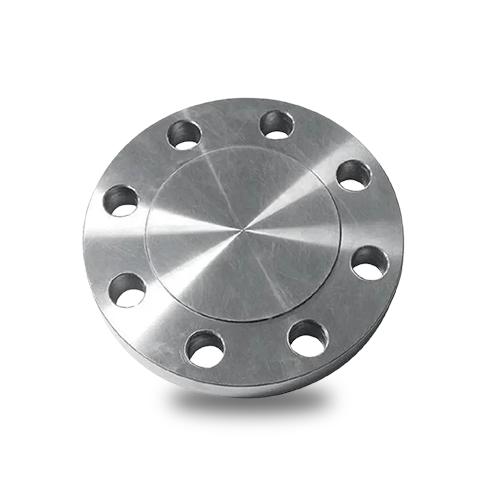
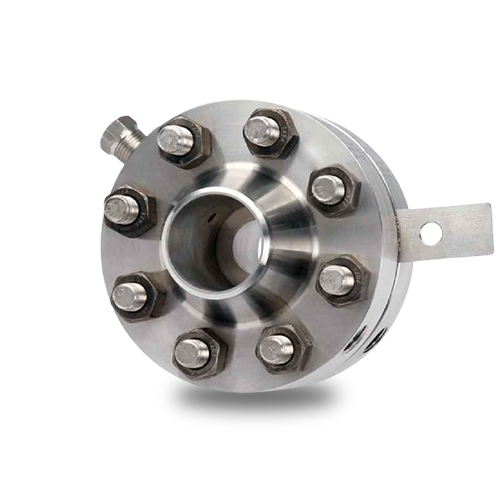
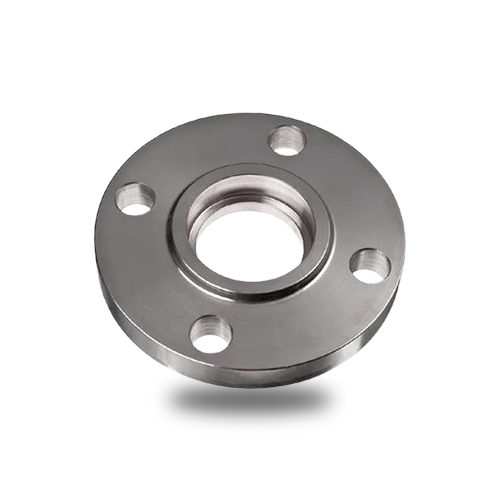
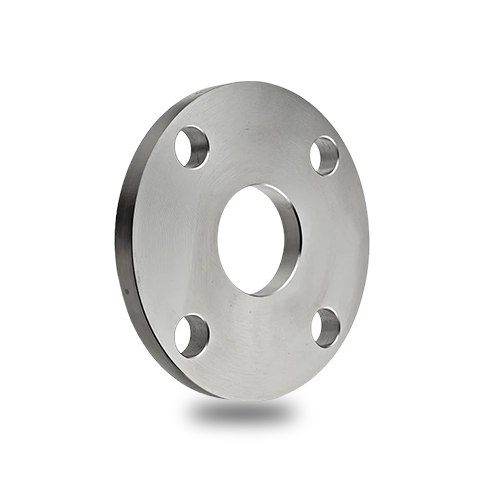
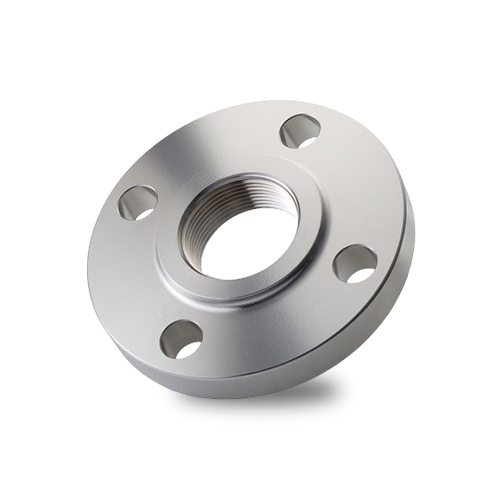
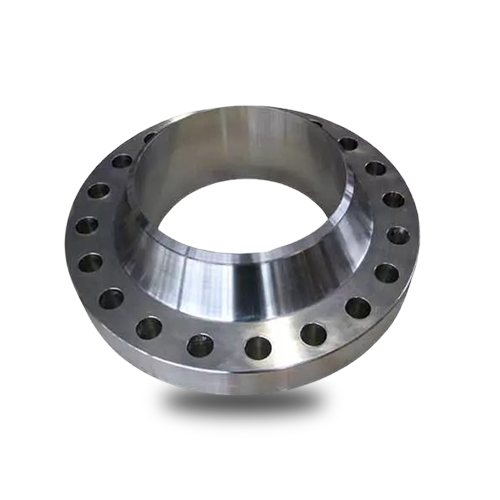
Customized Alloy Steel Flanges as per project's specific requirements
- Carbon (C) : This element is fundamental for the strength and hardness of alloy steel flanges. It usually ranges from 0.15% to 0.30%, though some specialized grades may have a lower maximum limit.
- Manganese (Mn) : Manganese enhances strength, hardenability, and the overall toughness of the flange. You'll consistently find it in the range of 0.30% to 0.60% across different low-alloy flange grades.
- Silicon (Si) : During steelmaking, silicon acts as a deoxidizer, and it also contributes some strength to the alloy. Silicon is present in amounts ranging from 0.15% to 0.50%, with some grades having a maximum limit of 0.50%.
- Chromium (Cr) : While chromium does offer some corrosion resistance, its primary role in low-alloy flanges is to increase hardenability. As you move from F5 grade to F22, the chromium content increases from 0.40%-0.80% up to 2.00%-2.50%, providing progressively better performance.
- Molybdenum (Mo) : Molybdenum is a powerful strengthener, especially at high temperatures. It significantly improves hardenability and creep resistance (resistance to deformation under high temperature and stress). Molybdenum content varies from 0.45%-0.65% in F5 grade and ranges between 0.25%-1.00% in F22 grade
- Strength : This refers to the flange's ability to withstand forces without failing. Yield strength indicates the point where it starts deforming permanently, while tensile strength is the maximum stress it can handle before breaking. Both are measured in units like MPa or ksi.
- Hardness : Hardness measures the flange's resistance to surface wear, scratching, and indentation. It's often measured using the Rockwell or Brinell scales, and a higher hardness value generally means better wear resistance.
- Toughness : Toughness signifies the flange's ability to absorb energy before fracturing. This makes it resistant to cracking under sudden loads or impacts. Toughness is often tested using the Charpy V-Notch impact test.
- Ductility : This describes how much the flange can deform before breaking. Higher ductility means the flange can bend or stretch slightly without fracturing, which can be beneficial in some applications.
- Creep Resistance : Especially important in high-temperature applications, creep resistance measures the flange's ability to withstand deformation over time under constant high temperature and stress. This is crucial in industries like power generation where flanges are exposed to extreme conditions
- Pressure Classes : Alloy steel flanges are categorized into various pressure classes, with the most common being Class 150, Class 300, Class 600, Class 900, Class 1500, and Class 2500. The class designation generally indicates the pressure-handling capacity of the flange, with higher class numbers corresponding to flanges designed to withstand higher pressures.
- Pressure-Temperature Ratings : The pressure an alloy steel flange can safely handle isn't a constant value. It's directly affected by the operating temperature. As the temperature rises, the allowable pressure for a specific flange decreases. To determine the exact pressure-temperature relationship, you'll need to consult detailed tables provided in ASTM and ASME standards.
- Important Considerations : It's crucial to always reference the manufacturer's datasheet or the relevant ASTM/ASME standards to find the precise pressure-temperature ratings for a specific alloy steel flange. When selecting a flange, ensure its pressure class surpasses the maximum expected operating pressure (including a safety margin) even at the highest anticipated temperature
- Key Standards Organizations :
- ASTM International : Creates a comprehensive range of standards for mechanical testing and the properties of alloy steel products.
- ASME : Parts for pipelines, pressure vessels, and related systems are their specialty. Include requirements for mechanical qualities in the specs.
- International Organization for Standardization (ISO) : They are in charge of setting global standards, especially those relating to steel mechanical testing.
- Important ASTM Standards for Mechanical Properties :
- ASTM A370 : Standard Test Methods and Definitions for Mechanical Testing of Steel Products.
- ASTM E23 : Standard Test Methods for Notched Bar Impact Testing of Metallic Materials.
- ASTM A941 : Standard Terminology Relating to Steel, Stainless Steel, Related Alloys, and Ferroalloys
The EBY Fasteners Advantage for Alloy Steel Flanges
- Wide Range of High-Performance Alloys : EBY Fasteners caters to your specific demands by providing a comprehensive selection of alloy steel flanges. From versatile low-alloy grades to highly specialized stainless steels and corrosion-resistant high-alloy options, ensuring the perfect fit for your piping system's requirements.
- Strict Adherence to Standards : EBY Fasteners prioritizes quality and reliability. Their alloy steel flanges rigorously comply with ASTM, ASME, and other relevant industry standards, guaranteeing dimensional accuracy, mechanical integrity, and compatibility within your systems.
- Meticulous Quality Control : EBY Fasteners implements stringent quality control measures throughout the manufacturing process. This may involve material testing, dimensional inspections, and potentially non-destructive examination techniques to ensure their flanges meet performance expectations and minimize defects.
- Focus on Demanding Applications : With expertise in serving industries like oil and gas, chemical processing, and power generation, EBY Fasteners understands the challenges of harsh environments. Their alloy steel flanges are engineered to withstand high pressures, extreme temperatures, corrosive fluids, and other demanding conditions.
- Customer-Centric Approach : EBY Fasteners prioritizes your needs as a customer. Whether it's providing technical support to select the optimal alloy grade, offering custom or non-standard flanges, or providing responsive delivery times, their focus is on ensuring your project's success