Skip links

SS / Duplex & Super Duplex Reducers (CONC. & ECC.)

Home - SS / duplex & super duplex - SS / duplex & super duplex Seamless Buttweld Fittings - SS / Duplex & Super Duplex Reducers (CONC. & ECC.)

SS / Duplex and Super Duplex Reducers (CONC. & ECC.)

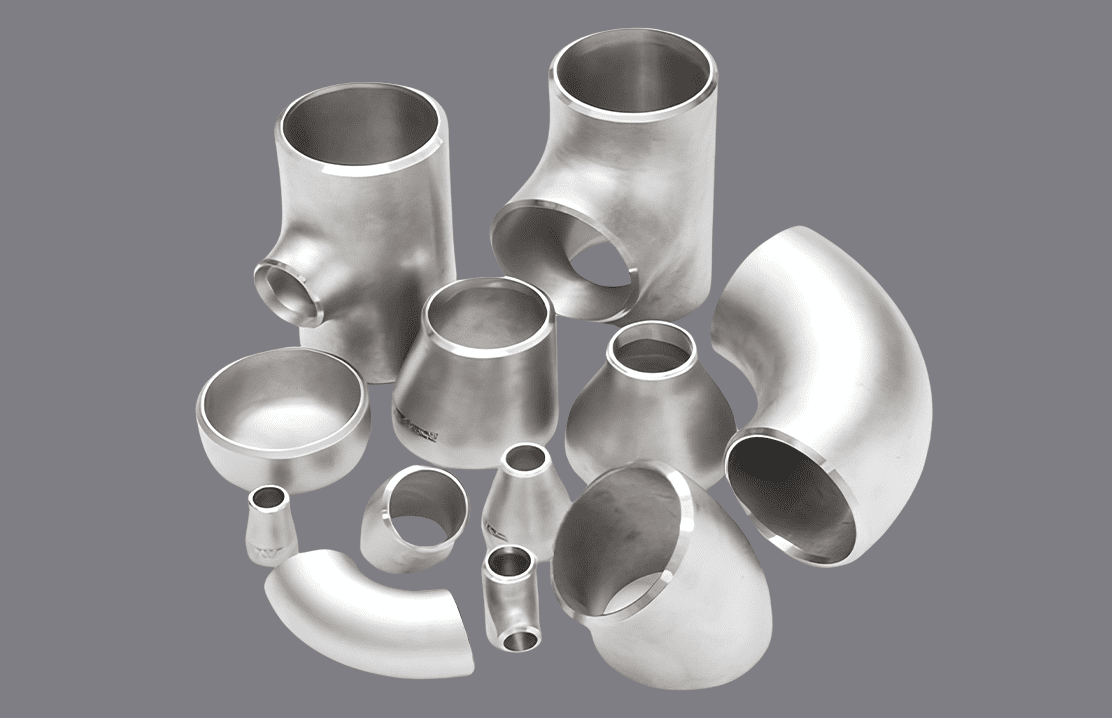
EBY Fasteners provides SS / Duplex and Super Duplex Reducers for seamlessly connecting pipes of different sizes. Both Concentric and Eccentric types are available, offering flexibility in how you transition your flow within industrial piping systems. These reducers are manufactured using high-quality stainless steel, duplex, or super duplex alloys for strength and corrosion resistance
Concentric Reducers provide a gradual, symmetrical reduction, maintaining the centerline of the connected pipes. Ideal for smooth flow transitions. Eccentric reducers offer an offset reduction with a flat bottom. Perfect for horizontal lines to prevent trapped liquids or sediment
EBY’s reducers utilize a range of stainless steel, duplex, or super duplex grades. This ensures you can select the ideal material to withstand the corrosive elements within your system while meeting strength and cost requirements. Compliance with industry standards, like ASTM and ASME, guarantees dimensional precision and reliability in demanding applications
  • 304/304L : These offer a good baseline of corrosion resistance for general-purpose use. 304L, with its lower carbon, is a better choice when extensive welding is required.
  • 316/316L : Molybdenum addition enhances these grades, allowing them to resist chlorides (like seawater) and certain acids. Again, 316L's lower carbon content improves its welding suitability.
  • 2205 (UNS S31803/S32205) : A versatile duplex grade offering excellent corrosion resistance and significantly higher strength than standard stainless steel. Suitable for chemical processing, marine environments, and higher pressure applications.
  • 2507 (UNS S32750) : This super duplex grade excels in the harshest environments. Seawater, acids, and high concentrations of chlorides are easily handled, along with having exceptional strength for demanding applications.
  • ASTM A403 / ASME SA403 : Cover specifications for wrought stainless steel fittings (like reducers). The "WP" denotes wrought products.
  • ASTM A182 / ASME SA182 : These standards govern stainless steel materials, which can also be used to manufacture reducers, indicated by the "F" designation.
  • DIN Standards : European equivalents of ASTM standards, ensuring compatibility when sourcing fittings internationally or for replacements within an existing system
  • Standards : Reducers comply with relevant standards like ASTM A403/A815 (for wrought fittings), ASTM A182/ASME SA182 , and potentially MSS SP-43 for dimensional requirements. Adherence guarantees compatibility, dimensional accuracy, and quality.
  • Material Grades : Reducers are manufactured from a range of stainless steel grades (304/304L, 316/316L), duplex stainless steel (like 2205), and super duplex (like 2507). Each offers specific advantages in corrosion resistance, strength, and cost-effectiveness for different applications.
  • Size & Dimensions : Available in various Nominal Pipe Sizes (NPS) to match your existing piping. Wall thickness (or schedule) is crucial as it determines pressure handling capabilities and should align with standards like ASME B36.10/B36.19.
  • Type : Concentric reducers offer a gradual, symmetrical reduction in diameter, ideal for maintaining smooth flow characteristics. Eccentric reducers provide an offset reduction, useful in horizontal lines to prevent trapped liquids or sediment while maintaining bottom pipe elevation.
  • End Connections : Butt-weld ends are standard, ensuring a seamless and leak-proof integration into your piping system.
  • Pressure Rating : Reducers are rated for a range of pressures (ex: 150#, 300#, etc.). The rating is determined by factors like material grade, wall thickness, and overall design.
  • Testing & Certification : Material Test Reports (MTRs) verify the alloy's chemical composition and mechanical properties, assuring it meets the specified grade. Hydrostatic pressure testing may be conducted for high-pressure applications to ensure integrity and safety
  • Fight Corrosion : These reducers are engineered from stainless steel, duplex, or super duplex grades, providing varying levels of corrosion resistance. Choose the material to match the aggressiveness of the fluids in your system.
  • Built to Last : High strength and durability are hallmarks, especially in duplex and super duplex grades. This minimizes downtime due to failures and ensures long-term reliability, even in high-pressure environments.
  • Control Your Flow : Concentric reducers reduces pipe size smoothly for minimal flow disruption, ideal for maintaining flow efficiency. Eccentric reducers offset reduction keeps the bottom of your horizontal pipe run at the same level, preventing trapped fluids or buildup.
  • Widely Applicable : The available material grades, strength, and size options make these reducers versatile solutions across industries. Find them in oil and gas, chemical processing, marine environments, water treatment, and more.
  • Integrate with Ease : Butt-weld ends offer leak-tight integration into piping systems. Be mindful to follow welding procedures appropriate for the chosen reducer material.
  • Dependable Quality : Adherence to industry standards (ASTM, ASME, etc.) assures you of accurate dimensions, correct material composition, and overall performance, simplifying installation and ensuring trouble-free operation
  • Refinery & Petrochemical : Reducers are integral in refinery and petrochemical plants, aiding in fluid transfer between pipes of different sizes while withstanding corrosive substances commonly encountered in these industries.
  • Chemical : In chemical processing facilities, reducers play a vital role in managing pipe size transitions, ensuring efficient flow of corrosive chemicals through pipelines and processing equipment.
  • Oil & Gas : Reducers are utilized in oil and gas pipelines and facilities to facilitate smooth transitions between pipe diameters, contributing to the overall integrity and efficiency of fluid transport systems.
  • Power Plant : Within power generation plants, reducers are essential components for managing steam and water flow, maintaining pressure levels, and supporting the reliable operation of power generation equipment.
  • Offshore Platforms : On offshore platforms, reducers are crucial for connecting pipes and managing flow dynamics in harsh marine environments, providing resistance against corrosion and maintaining operational safety.
  • Ship Building : In shipbuilding, reducers ensure seamless connections between pipes of varying sizes, contributing to the structural and functional integrity of fluid handling systems onboard ships.
  • Industrial Machineries : Reducers find applications in various industrial machinery setups, aiding in fluid flow management and size reduction of piping systems critical for industrial processes.
  • Pharmaceuticals : Within pharmaceutical manufacturing, reducers support hygienic and efficient fluid transfer, maintaining sterile conditions and complying with stringent regulatory standards.
  • Pumps & Compressors : In pump and compressor systems, reducers enable efficient fluid handling by adapting pipe sizes and optimizing flow dynamics, ensuring reliable operation and performance.
  • Dairy & Food : Reducers are utilized in food and dairy processing to manage pipe size transitions, ensuring sanitary fluid handling and meeting food safety requirements in production facilities.
  • Sugar Mills : In sugar processing plants, reducers aid in managing fluid flow and pipe connections, contributing to the efficiency and reliability of sugar production processes.
  • Textile Machineries : Reducers play a role in textile manufacturing by facilitating fluid flow control and pipe size adjustments, supporting seamless production operations in dyeing and finishing processes.
  • Fertilizers & Pesticides : Within fertilizer and pesticide manufacturing, reducers help in managing fluid flow and pipe connections, ensuring efficient handling of corrosive substances and supporting production activities

Chemical Composition

ElementPercentage
Manganese (Mn)1-2%
Silicon (Si)1% max
Phosphorus (P)0.03% max
Sulfur (S)0.02% max
Nitrogen (N)0.14-0.2%
Carbon (C)0.03% max
Chromium (Cr)24-26%
Nickel (Ni)6-8%
Molybdenum (Mo)3-4%

SS / duplex & super duplex Seamless Buttweld Fittings

SS / duplex & super duplex

SS / Duplex & Super Duplex Branch Outlets

SS / Duplex & Super Duplex Flanges

SS / Duplex & Super Duplex Forged Pipe Fittings

SS / Duplex & Super Duplex Seamless
Buttweld Fittings