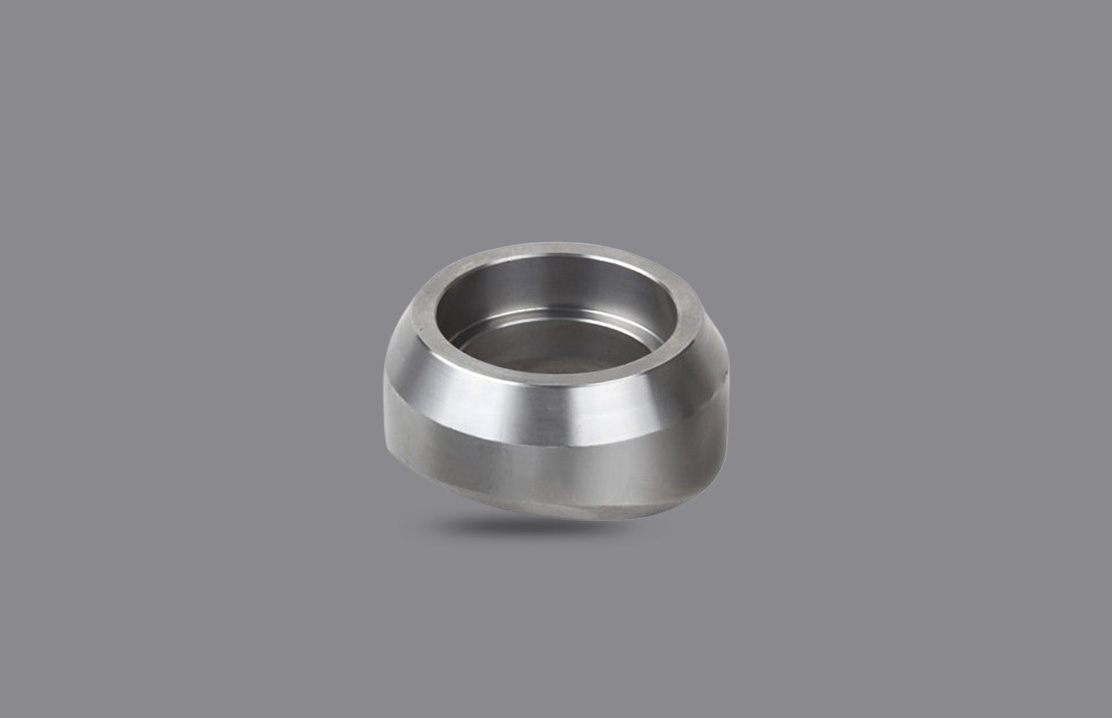
Alloy Steel Socket Weld Outlet
Home - Alloy Steel - Alloy Steel Branch Outlets - Alloy Steel Socket Weld Outlet
Alloy Steel Socket Weld Outlet
Select Alloy Steel Socket Weld Outlets from EBY Fasteners for industrial applications where strength, robustness, and durability are crucial. These outlets provide exceptional performance in high-temperature, high-pressure, or possibly corrosive process lines since they are designed for harsh conditions. Take advantage of our wide range of alloy grades, sizes, and pressure classes to match your piping needs precisely
The Alloy Steel Socket Weld Outlets from EBY Fasteners are produced in accordance with strict industry standards, guaranteeing precise dimensions, dependable connections, and manufacturer compatibility. You can rely on these outputs to provide your piping systems with strong performance, leak-free operation, and optimal flow characteristics. Our experienced staff offers advice to make sure you choose the best outlet for your application


The alloy steel Socket Weld outlets from EBY Fasteners are up to the task of handling the rigors of a refinery, chemical processing plant, power generating facility, offshore platform, or other harsh industrial environment. Discover the difference that comes from using premium materials, careful construction, and a dedication to long-term dependability in your vital piping systems. To maximize your operations, get in touch with us now


The alloy steel Socket Weld outlets from EBY Fasteners are up to the task of handling the rigors of a refinery, chemical processing plant, power generating facility, offshore platform, or other harsh industrial environment. Discover the difference that comes from using premium materials, careful construction, and a dedication to long-term dependability in your vital piping systems. To maximize your operations, get in touch with us now
- Material : Alloy Steel: Unlike basic carbon steel, alloy steels are formulated with carefully selected elements such as chromium, molybdenum, nickel, and others. These additions significantly enhance material properties, including strength, toughness, temperature resistance, and may offer specialized corrosion resistance for specific environments. This makes them ideal for Socket Weld outlets intended for demanding industrial applications.
- Grade: ASTM / ASME A/SA 182 F1, F5, F9, F11, F22, F91 : This ASTM standard covers forged alloy steel fittings designed for high-pressure and high-temperature service. Each grade offers a unique balance of properties:
- F1 & F5 : Prioritize strength and toughness for general high-pressure service or moderate high-temperature applications.
- F11 & F22 : Offer improved creep resistance (resistance to deformation at high temperature and stress), making them suitable for more demanding process lines.
- F9 & F91 : Provide exceptional creep resistance, ideal for severe high-temperature environments within refineries, power plants, and other applications with extreme conditions.
- The Importance of Grade Selection : Selecting the correct alloy grade for your Socket Weld outlet is crucial. It must be able to:
- Withstand the operating pressures and temperatures of your system.
- Resist any corrosive effects of fluids within the system.
- Maintain integrity in the operating environment (marine, high temperature, etc.).
- Ensure long-term reliability and prevent premature failures that could lead to leaks or downtime
- Outlet Size (Inches) : This column lists the standard nominal pipe sizes (NPS) that the outlet is designed to connect with. Precisely matching the outlet's size to the pipe or fitting you're attaching it to is critical for a secure and leak-proof Socket Weld joint.
- Dimensions (Inches) : This column likely provides two dimensions: the overall length of the outlet and the Socket Weld depth.
- Length : This dimension is crucial for determining whether you have sufficient clearance within your piping system to accommodate the outlet.
- Socket Depth : This refers to the depth of the socket into which the pipe will be inserted before welding. Ensuring proper socket depth is essential for creating a strong weld joint.
- Appx. Weight (Pounds) : The approximate weight provides an indication of the outlet's mass. This information can be useful for logistical considerations, shipping calculations, or when assessing the load on your piping support structures.
- Understanding the Relationship : It's important to select an Alloy Steel Socket Weld Outlet with the following:
- Size : Precisely matches the pipe you intend to connect.
- Dimensions : Ensure adequate clearance within your system and a secure socket depth for welding.
- Strength & Materials : The alloy grade should be selected based on the pressure, temperature, and any corrosive elements within your system
- Unmatched Strength & Durability : Thoroughly adding components such as molybdenum, chromium, and other elements to the steel composition greatly improves the overall strength, toughness, and wear resistance of the outlet. Longer service life, appropriateness for high-pressure systems, and resistance under demanding industrial circumstances are the results of this.
- High-Temperature Performance : The thermal strains present in process lines handling hot fluids or functioning in high-temperature settings can be tolerated by alloy steel grades made expressly for high-temperature usage. This lowers the possibility of malfunctions or material deterioration, guaranteeing dependable operation in demanding applications.
- Secure, Leak-Free Joints : Leak risk is reduced by the strong, long-lasting seals that are produced by socket-welded connections. This makes them perfect for applications where downtime due to leakage would be extremely costly or disruptive, such as vital pipelines, systems handling dangerous or valuable fluids, etc.
- Adaptability for Diverse Needs : There is a wide range of conventional pipe sizes, pressure ratings, and alloy compositions available for alloy steel Socket Weld outputs. With such a wide assortment, you can find the ideal solution for the operating pressures, temperatures, corrosive properties, and overall needs of your particular system.
- Combating Corrosion : Selecting grades of alloys with improved resistance to corrosion offers a significant benefit when working with corrosive fluids or in severe industrial settings. By doing this, you increase the longevity of your plumbing parts, saving money on maintenance and lowering the possibility of unplanned breakdowns.
- Quality Assurance Through Standards : Adherence to standards like ASME B16.11 ensures dimensional accuracy, compatibility across different manufacturers' products, and predictable performance. This gives you peace of mind during installation and simplifies the integration of these outlets into your existing piping networks
- Refinery & Petrochemical : Petrochemical and refinery facilities require alloy steel Socket Weld outputs. They are necessary for building process lines under high pressure that are robust enough to handle challenging fluids. Certain grades of alloys offer the heat resistance or corrosion resistance required to guarantee long-term dependability in environments exposed to high temperatures or potentially corrosive substances.
- Chemical : Alloy steel Socket Weld outlets are essential for creating safe and leak-proof process piping networks in the chemical processing sector. These outlets provide strong connections that are resistant to hostile chemical conditions and high pressures. Choosing outlets with specific alloy compositions protects piping system integrity when very aggressive chemicals are involved, reducing expensive leaks and repairs.
- Oil & Gas : The oil and gas sector uses alloy steel Socket Weld outlets extensively in everything from complicated processing facilities to pipelines and gathering lines. They are necessary for the safe and effective processing and transportation of resources because of their strong structure and exceptional performance under stress. When severe environmental conditions are a factor, certain grades may be chosen for improved corrosion resistance.
- Power Plant : Alloy steel Socket Weld outlets are frequently found in steam systems and other parts of power plants that have high temperatures, high pressures, or potentially corrosive fluids. They offer a more durable solution than a simple carbon steel could, guaranteeing that the plant's pipe systems can resist these demanding circumstances.
- Offshore Platforms : Process pipe systems on offshore sites must have robust components because of the harsh marine environment. Because of their exceptional resistance to corrosion, alloy steel Socket Weld outlets are perfect for the demands of saltwater exposure. In order to guarantee the dependable and leak-free connections required for secure and effective platform operations, they are widely utilized in these process lines
Chemical Composition
| Element | Composition (%) |
|---|---|
| Carbon (C) | 0.05-0.15 |
| Manganese (Mn) | 0.30-0.60 |
| Phosphorus (P) | 0.025 max |
| Sulfur (S) | 0.025 max |
| Silicon (Si) | 0.50 max |
| Chromium (Cr) | 1.90-2.60 |
| Molybdenum (Mo) | 0.87-1.13 |
- Refinery & Petrochemical : Petrochemical and refinery facilities require alloy steel Socket Weld outputs. They are necessary for building process lines under high pressure that are robust enough to handle challenging fluids. Certain grades of alloys offer the heat resistance or corrosion resistance required to guarantee long-term dependability in environments exposed to high temperatures or potentially corrosive substances.
- Chemical : Alloy steel Socket Weld outlets are essential for creating safe and leak-proof process piping networks in the chemical processing sector. These outlets provide strong connections that are resistant to hostile chemical conditions and high pressures. Choosing outlets with specific alloy compositions protects piping system integrity when very aggressive chemicals are involved, reducing expensive leaks and repairs.
- Oil & Gas : The oil and gas sector uses alloy steel Socket Weld outlets extensively in everything from complicated processing facilities to pipelines and gathering lines. They are necessary for the safe and effective processing and transportation of resources because of their strong structure and exceptional performance under stress. When severe environmental conditions are a factor, certain grades may be chosen for improved corrosion resistance.
- Power Plant : Alloy steel Socket Weld outlets are frequently found in steam systems and other parts of power plants that have high temperatures, high pressures, or potentially corrosive fluids. They offer a more durable solution than a simple carbon steel could, guaranteeing that the plant's pipe systems can resist these demanding circumstances.
- Offshore Platforms : Process pipe systems on offshore sites must have robust components because of the harsh marine environment. Because of their exceptional resistance to corrosion, alloy steel Socket Weld outlets are perfect for the demands of saltwater exposure. In order to guarantee the dependable and leak-free connections required for secure and effective platform operations, they are widely utilized in these process lines
