SS / Duplex & Super Duplex Equal & Unequal Tee
Home - SS / duplex & super duplex - SS / duplex & super duplex Seamless Buttweld Fittings - SS / Duplex & Super Duplex Equal & Unequal Tee
SS / Duplex and Super Duplex Equal and Unequal Tee
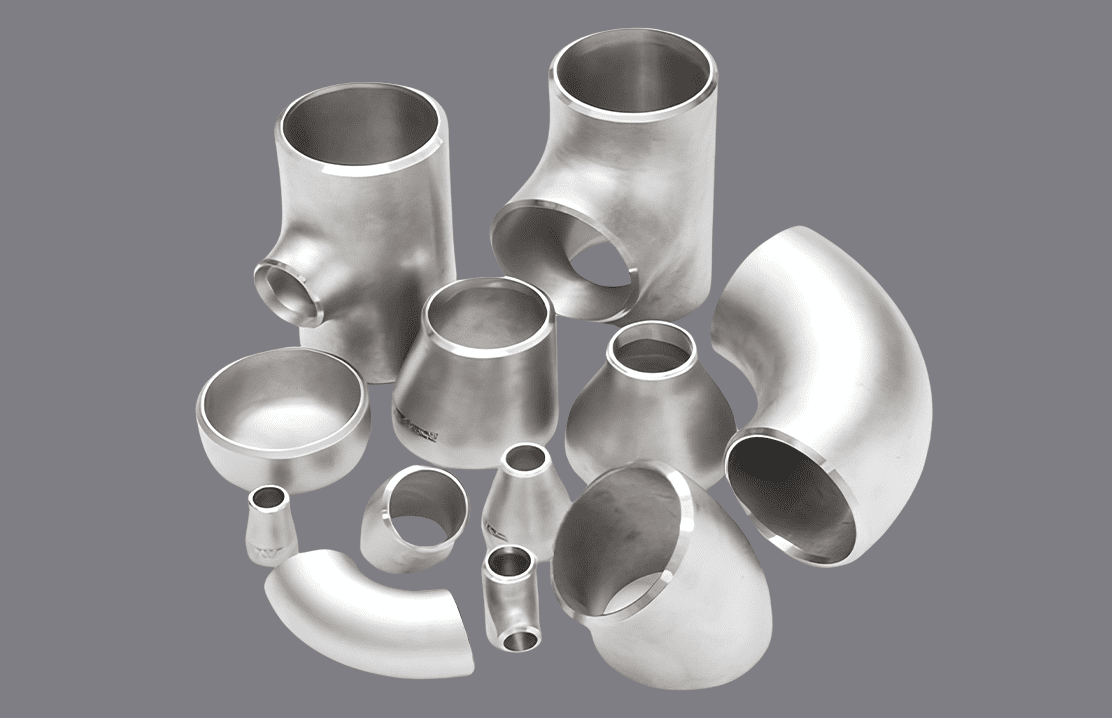
EBY Fasteners provides a wide selection of SS / Duplex and Super Duplex Equal and Unequal Tees. These fittings are essential for creating branches in your industrial piping, allowing you to split or combine flows with precision. Their seamless buttweld construction ensures a strong and leak-tight connection for reliable operation
Equal tees have three openings of the same size, perfect for evenly distributing flow in a 90-degree branch. Unequal tees feature a smaller branch, giving you the ability to reduce flow in a specific direction or tap off a smaller line from a larger one. This flexibility makes them ideal for a wide range of applications where flow control is important

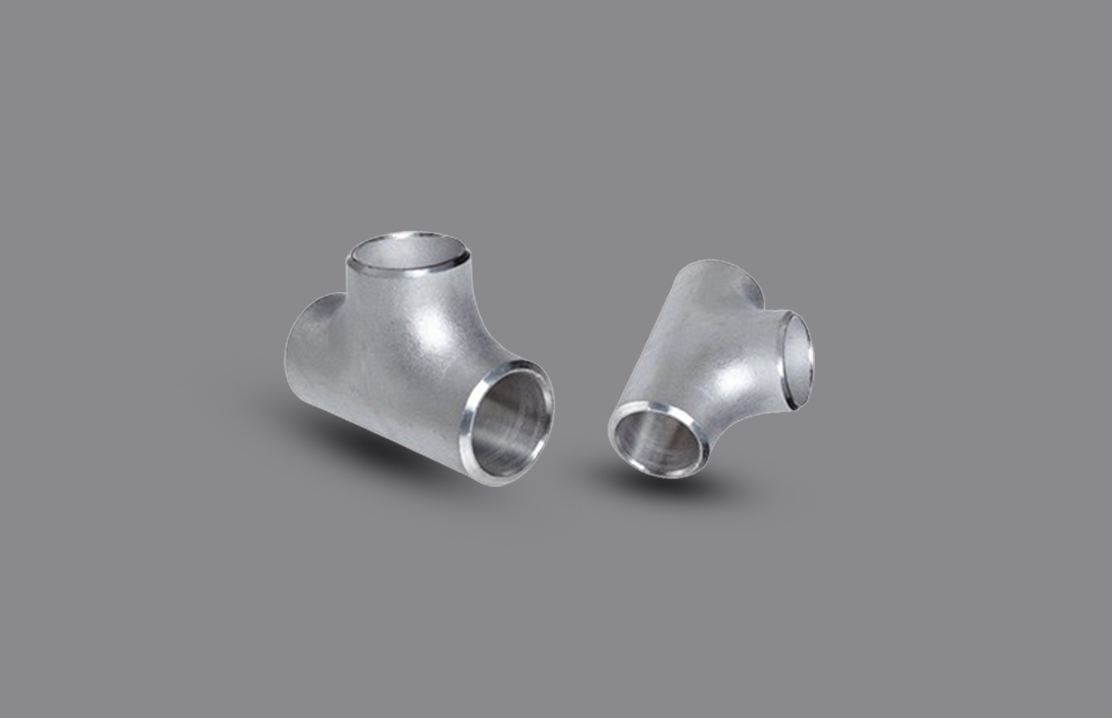
EBY Fasteners manufactures their tees from high-grade stainless steel, duplex, or super duplex alloys. These materials offer excellent corrosion resistance, strength, and durability to handle demanding environments. Compliance with industry standards, such as ASTM and ASME, guarantees dimensional compatibility and ensures the fittings meet strict quality requirements for your critical piping systems
EBY Fasteners manufactures their tees from high-grade stainless steel, duplex, or super duplex alloys. These materials offer excellent corrosion resistance, strength, and durability to handle demanding environments. Compliance with industry standards, such as ASTM and ASME, guarantees dimensional compatibility and ensures the fittings meet strict quality requirements for your critical piping systems
- 304/304L : They offer good corrosion resistance for general applications like freshwater handling or less-aggressive chemicals. The difference is that 304L has lower carbon, making it better suited for welding as it reduces the risk of a phenomenon called sensitization which can compromise corrosion resistance near welds.
- 316/316L : The addition of molybdenum is the key here. This significantly enhances resistance to chlorides (think saltwater) and some acids. 316L, again, is the lower-carbon version, making it a better choice for applications requiring a lot of welding.
- 2205 (UNS S31803/S32205) : A significant step up from standard stainless steels. These offer much higher strength, ideal for high-pressure applications. Their corrosion resistance outperforms 316 stainless in most cases, making them suitable for chemical processing, desalination, and even marine environments.
- 2507 (UNS S32750) : Reserved for the harshest environments. They easily handle seawater, highly concentrated chlorides, acids, and offer exceptional strength. You often find them on offshore platforms and in demanding chemical processing applications.
- ASTM A403 / ASME SA403 : These govern the specifications for wrought fittings (made from pipe or through processes like rolling and bending). 'WP' indicates a wrought product, which is common for tees.
- ASTM A182 / ASME SA182 : These focus on stainless steel materials (shaped by hammering or pressing). Fittings like tees can be buttwelded as well, and the 'F' denotes this distinction.
- DIN Standards : These are the European equivalents of ASTM standards. Knowing these ensures compatibility when you have a mix of fittings sourced from different regions, or if you need to replace a fitting down the road
- Standards : Tees adhere to standards like ASTM A403/A815 (wrought fittings), ASTM A182/ASME SA182, and MSS SP-43 (dimensional guidelines). These ensure compatibility and consistent quality.
- Material Grades : Common choices include 304/304L and 316/316L stainless steel, 2205 (duplex), and 2507 (super duplex). Each grade offers distinct levels of corrosion resistance, strength, and cost.
- Size & Dimensions : Tees come in a wide range of nominal pipe sizes (NPS) to match your piping. Wall thickness (schedule) dictates strength and pressure handling, aligning with standards like ASME B36.10/B36.19.
- Type : Choose between Equal Tees (all branches the same size) or Unequal Tees (one branch smaller) depending on your flow distribution needs.
- End Connections : Butt-weld connections are the most common for seamless integration within piping systems and ensure leak-tightness.
- Pressure Rating : Tees are rated for various pressures (e.g., 150#, 300#, etc.). The rating depends on the material grade, wall thickness, and design.
- Testing & Certification : Look for Material Test Reports (MTRs) verifying the chemical composition and mechanical properties. Hydrostatic pressure testing might be performed for demanding applications
- Exceptional Resistance to Corrosion : These tees are designed to withstand corrosion. Stainless steel offers good general resistance, with improved performance in grades like 316. Duplex and super duplex grades excel in harsh environments with chlorides, acids, and seawater.
- Built Strong for Long Life : Especially in duplex and super duplex grades, these tees boast impressive strength and durability. This makes them ideal for high-pressure applications and minimizes the risk of failure, ensuring your system's longevity.
- Precise Flow Control : Equal tees provide perfectly balanced flow distribution when creating 90-degree branches. Unequal tees give you flexibility, allowing you to reduce flow in a specific direction or create smaller offshoot lines from your main pipe.
- Wide Range of Applications : The combination of corrosion resistance, strength, and available grades makes these tees invaluable across industries. You'll find them in oil and gas, chemical processing, marine environments, water treatment, and many more.
- Easy Integration : Butt-welded ends provide a seamless and reliable connection to your piping systems. However, double-check the specific welding procedures recommended for your chosen material grade.
- Quality Assurance : Adherence to industry standards (ASTM, ASME, etc.) guarantees consistent dimensional accuracy, material integrity, and overall compatibility for trouble-free integration into your piping systems
- Refinery & Petrochemical : Tees redirect crude oil, refined products, and process chemicals. Grade selection is vital to handle the specific fluids and conditions.
- Chemical : Tees handle piping for aggressive chemicals in processing systems and storage tanks. Compatibility with the exact chemicals is critical.
- Oil & Gas : Tees are used in pipelines for raw oil and gas, as well as in processing facilities where pressures and corrosive fluids demand high-performance materials.
- Power Plant : Tees are found in cooling systems (prioritizing corrosion resistance, especially with seawater) and potentially in steam or wastewater handling depending on conditions.
- Offshore Platforms : Tees are essential for process piping and for seawater-related systems (fire suppression, cooling, ballast) where super duplex is often chosen.
- Ship Building : Tees are found in engine rooms (fuel, cooling, exhaust), ballast systems (requiring saltwater resistance), and potentially in specialized chemical tankers.
- Industrial Machineries : Tees are used where corrosive hydraulic fluids, harsh external environments, or process chemicals demand superior corrosion resistance.
- Pharmaceuticals : Process piping requires hygienic tees to prevent contamination when handling purified water, ingredients, and cleaning solutions.
- Pumps & Compressor : Tees ensure smooth flow into and out of pumps and compressors, potentially needing corrosion-resistant grades in cooling systems.
- Dairy & Food, Sugar Mills, Textile Machineries, Fertilizers & Pesticides : These industries prioritize hygienic tees designed to handle both their specific products and the cleaning solutions used for sanitation
Chemical Composition
| Element | Percentage |
|---|---|
| Carbon (C) | Upto 0.08% |
| Chromium (Cr) | 18-20% |
| Nickel (Ni) | 8-10.5% |
| Molybdenum (Mo) | 2-3% |
| Manganese (Mn) | Upto 2% |
| Silicon (Si) | Upto 1% |
| Phosphorus (P) | Upto 0.045% |
| Sulfur (S) | Upto 0.03% |
SS / duplex & super duplex Seamless Buttweld Fittings